A calendar year always runs from January 1 to December 31. A fiscal year is any 12-month period an organization uses for budgeting, accounting and tax reporting, and it can start in any month. The US federal government's fiscal year runs from October 1 to September 30, and it is named for the year in which it ends: fiscal year 2027 started on October 1, 2026 and ends on September 30, 2027.
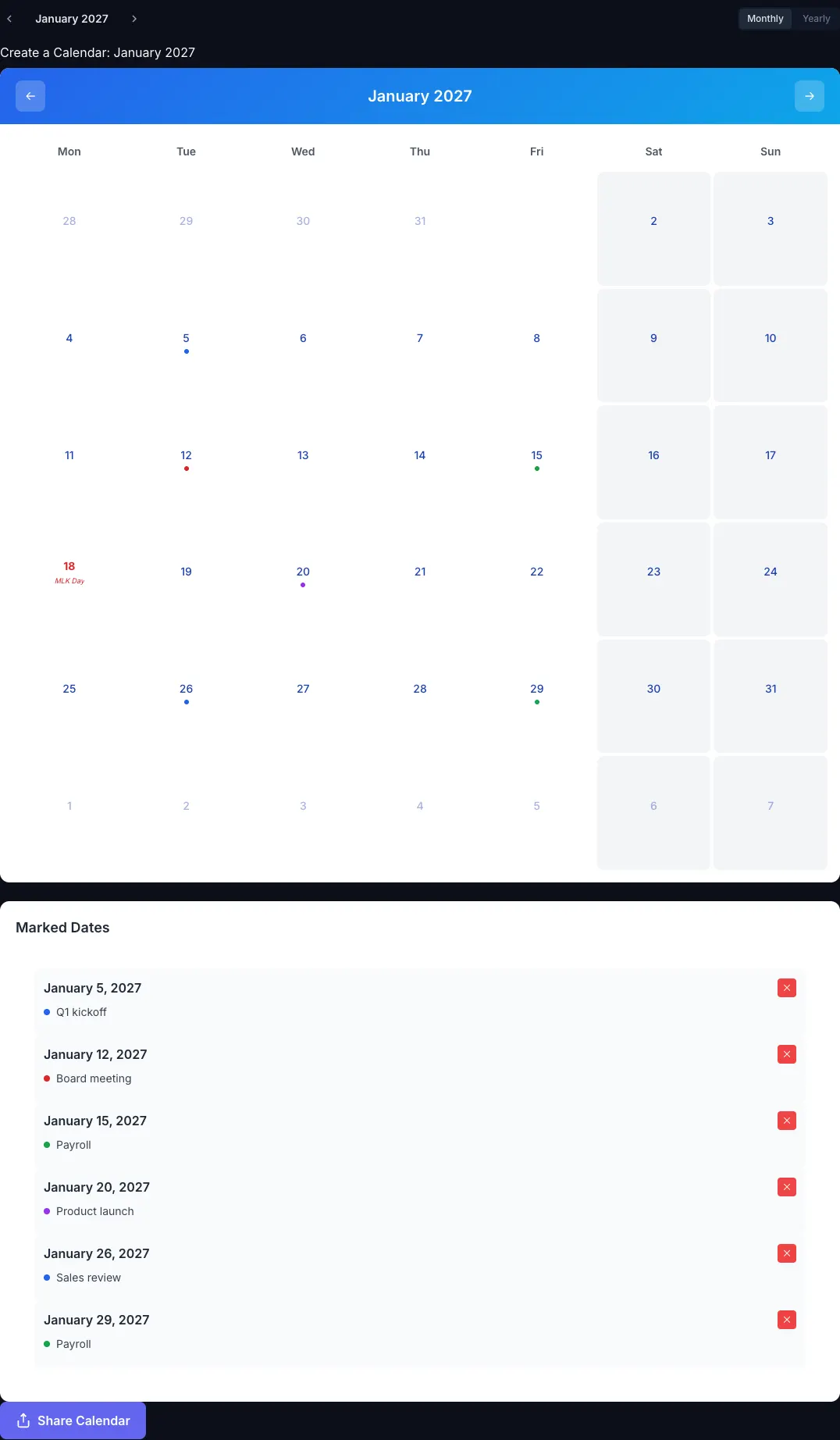
The difference in one table
| Calendar year | Fiscal year | |
|---|---|---|
| Dates | January 1 to December 31 | Any 12 consecutive months |
| Used for | Everyday dating, most individual taxes | Budgets, financial statements, business taxes |
| Named after | The year itself | Usually the year it ends in |
| Can be 52 or 53 weeks | No | Yes, for some businesses |
When a fiscal year matches the calendar year, as it does for many small businesses, the two terms mean the same thing.
Common fiscal years
| Organization | Fiscal year |
|---|---|
| US federal government | October 1 to September 30 |
| 46 US states | July 1 to June 30 |
| New York State | April 1 to March 31 |
| Texas | September 1 to August 31 |
| Alabama and Michigan | October 1 to September 30 |
| UK government | April 1 to March 31 |
| UK personal tax year | April 6 to April 5 |
| Canada federal government | April 1 to March 31 |
| Australia | July 1 to June 30 |
| India | April 1 to March 31 |
| Japan government | April 1 to March 31 |
Start dates in more countries are listed in the fiscal year overview.
Some well-known companies: Microsoft's fiscal year ends on June 30, Walmart's on January 31, and Apple's on the last Saturday of September.
Why organizations pick a fiscal year
- Seasonality. Retailers end their year after the holiday season and January returns, so a single year contains the whole peak and its aftermath.
- Budget cycles. Governments set the fiscal year so legislatures can pass a budget before the money is needed. The US moved its start from July 1 to October 1 in 1976 to give Congress more time.
- Matching a customer or funder. Contractors and nonprofits often align with the government agencies that pay them, and universities often match the academic year.
- Workload. Closing books outside December keeps year-end work away from the holidays and away from the accountants' busiest season.
The US tax rules
The IRS lets a business use either a calendar year or a fiscal year. A fiscal year must be 12 consecutive months ending on the last day of any month other than December. A business can also use a 52 to 53 week year that always ends on the same weekday, such as the last Saturday of a month. Individuals almost always file on the calendar year.
Naming and quarters
Because a fiscal year spans two calendar years, the label can confuse. FY2027 for the US government means October 2026 to September 2027, and its first quarter is October to December 2026. Write the dates out in planning documents, and keep a two-year calendar handy: the 2026 to 2027 calendar covers a full October to September or July to June fiscal year on one page. Quarter boundaries for each type of fiscal year are listed in quarters of the year.
If you plan around a school year as well, see how academic and fiscal calendars differ. For a printable planning sheet, the professional templates give you a clean layout to print one fiscal quarter at a time.
Frequently asked questions
A calendar year runs January 1 to December 31. A fiscal year is any 12-month period used for accounting and budgets, and it can start in any month.
October 1. Fiscal year 2027 runs from October 1, 2026 to September 30, 2027.
Yes. The IRS allows a fiscal year of 12 consecutive months ending on the last day of any month except December, or a 52 to 53 week year.