A calendar year has four quarters of three months each. Q1 runs from January 1 to March 31, Q2 from April 1 to June 30, Q3 from July 1 to September 30, and Q4 from October 1 to December 31. The quarters are not equal: Q1 has 90 days (91 in a leap year), Q2 has 91, and Q3 and Q4 have 92 each.
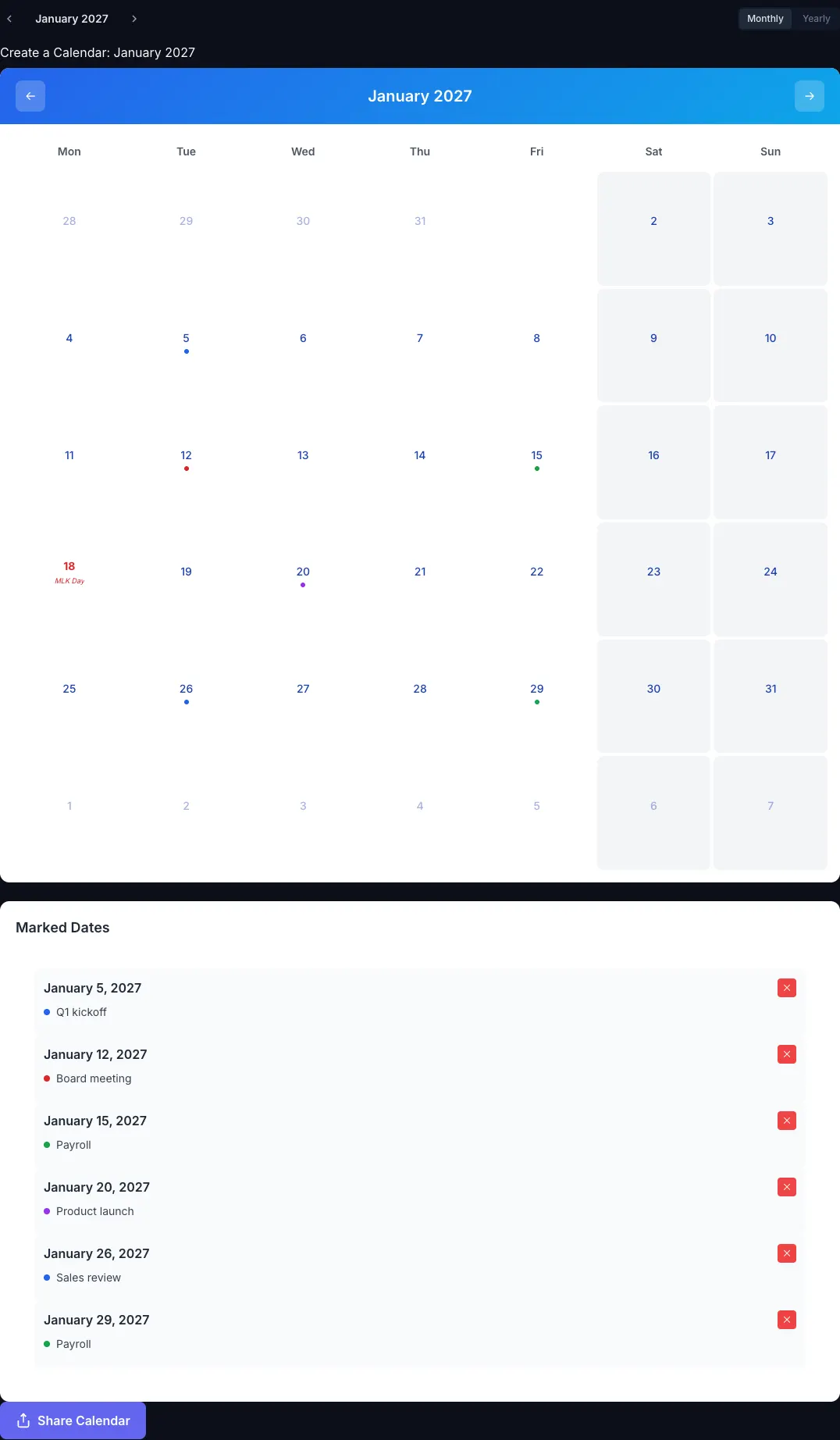
Calendar quarters at a glance
| Quarter | Months | Starts | Ends | Days |
|---|---|---|---|---|
| Q1 | January, February, March | January 1 | March 31 | 90 (91 in leap years) |
| Q2 | April, May, June | April 1 | June 30 | 91 |
| Q3 | July, August, September | July 1 | September 30 | 92 |
| Q4 | October, November, December | October 1 | December 31 | 92 |
The first half of the year (H1) is Q1 plus Q2, January 1 to June 30. The second half (H2) is Q3 plus Q4, July 1 to December 31. H2 is always longer: 184 days against 181 (182 in a leap year).
Q1 to Q4 dates in 2026
| Quarter | Start | End | Days |
|---|---|---|---|
| Q1 2026 | Thursday, January 1 | Tuesday, March 31 | 90 |
| Q2 2026 | Wednesday, April 1 | Tuesday, June 30 | 91 |
| Q3 2026 | Wednesday, July 1 | Wednesday, September 30 | 92 |
| Q4 2026 | Thursday, October 1 | Thursday, December 31 | 92 |
Q1 to Q4 dates in 2027
| Quarter | Start | End | Days |
|---|---|---|---|
| Q1 2027 | Friday, January 1 | Wednesday, March 31 | 90 |
| Q2 2027 | Thursday, April 1 | Wednesday, June 30 | 91 |
| Q3 2027 | Thursday, July 1 | Thursday, September 30 | 92 |
| Q4 2027 | Friday, October 1 | Friday, December 31 | 92 |
2028 is a leap year, so Q1 2028 runs from January 1 to March 31 with 91 days.
Fiscal quarters follow the fiscal year
Q1 means "the first quarter of the year," and for a company or government that year is often not the calendar year. Fiscal quarters start wherever the fiscal year starts:
| Fiscal year | Q1 | Q2 | Q3 | Q4 |
|---|---|---|---|---|
| Calendar year (Jan to Dec) | Jan to Mar | Apr to Jun | Jul to Sep | Oct to Dec |
| US federal government (Oct to Sep) | Oct to Dec | Jan to Mar | Apr to Jun | Jul to Sep |
| Most US states (Jul to Jun) | Jul to Sep | Oct to Dec | Jan to Mar | Apr to Jun |
| UK, Canada, India, Japan governments (Apr to Mar) | Apr to Jun | Jul to Sep | Oct to Dec | Jan to Mar |
For how fiscal years and their quarters are set by country, see the fiscal year overview.
So "Q1 FY2027" for a US federal agency means October 1 to December 31, 2026. When someone gives you a quarter, ask which year it belongs to. The differences are covered in fiscal year vs calendar year.
Quarters that are not three calendar months
Retailers and some manufacturers use a 4-4-5 calendar: each quarter is exactly 13 weeks, split into periods of 4, 4 and 5 weeks. Every quarter then has the same number of each weekday, which makes sales comparisons cleaner. The cost is that the year is 364 days, so these companies add a 53rd week every five or six years to stay aligned with the calendar. Variants use 4-5-4 or 5-4-4 instead. The leftover-day arithmetic behind this is in how many weeks are in a year.

Quarterly dates that do not match the quarters
US estimated income tax payments are called quarterly, but the due dates do not line up with calendar quarters. For the 2026 tax year they are:
- Wednesday, April 15, 2026 (income from January 1 to March 31)
- Monday, June 15, 2026 (April 1 to May 31)
- Tuesday, September 15, 2026 (June 1 to August 31)
- Friday, January 15, 2027 (September 1 to December 31)
The second "quarter" covers only two months and the last one covers four. When a due date falls on a weekend or legal holiday, it moves to the next business day.
Planning by quarter
A quarter is long enough for a real project and short enough to review honestly, which is why OKRs, sales targets and board reporting run on it. Print the quarter you are planning: the 2026 calendar and 2027 calendar show all twelve months with working days, and a professional template gives you a clean layout for a quarterly planning sheet.
Frequently asked questions
Calendar Q1 runs from January 1 to March 31. It has 90 days in a common year and 91 in a leap year.
Q1 is January to March, Q2 is April to June, Q3 is July to September, and Q4 is October to December.
The US federal fiscal year starts October 1, so its Q1 runs from October 1 to December 31. Q1 of fiscal year 2027 is October 1 to December 31, 2026.