In the United States, daylight saving time ends on Sunday, November 1, 2026, at 2:00 a.m. local time. Clocks go back one hour to 1:00 a.m., so you get an extra hour that night. DST ends on the first Sunday of November every year, and in 2027 that is November 7.
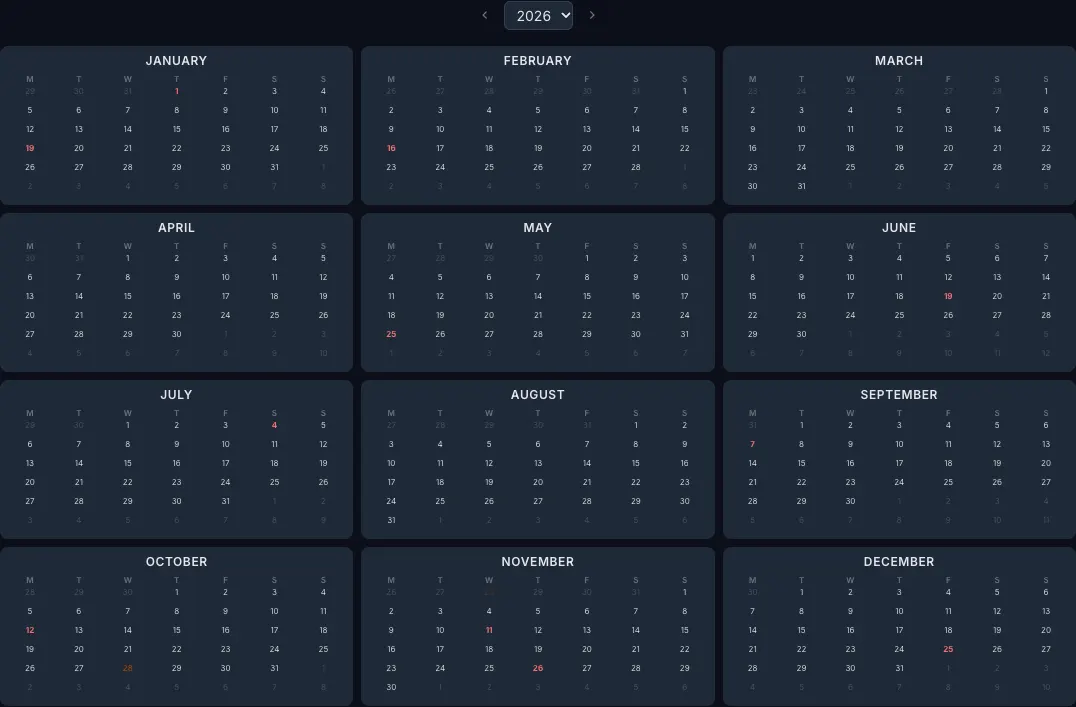
US daylight saving time dates
| Year | DST starts (clocks forward) | DST ends (clocks back) |
|---|---|---|
| 2025 | Sunday, March 9 | Sunday, November 2 |
| 2026 | Sunday, March 8 | Sunday, November 1 |
| 2027 | Sunday, March 14 | Sunday, November 7 |
| 2028 | Sunday, March 12 | Sunday, November 5 |
| 2029 | Sunday, March 11 | Sunday, November 4 |
The change happens at 2:00 a.m. in each time zone. In March clocks jump from 2:00 to 3:00 a.m.; in November they fall from 2:00 back to 1:00 a.m., so the hour from 1:00 to 1:59 a.m. happens twice. Phones and computers adjust on their own. Ovens, car clocks and older watches don't.
The rule
Under the Energy Policy Act of 2005, which took effect in 2007, US daylight saving time runs from the second Sunday in March to the first Sunday in November. Since the start can fall between March 8 and 14 and the end between November 1 and 7, DST always lasts exactly 34 weeks.
Before 2007, DST ran from the first Sunday in April to the last Sunday in October, which is why older devices sometimes change their clocks on the wrong weekend.
Who does not change clocks
States may opt out of daylight saving time but may not adopt it year-round on their own. These places stay on standard time all year:
- Hawaii
- Arizona, except the Navajo Nation, which observes DST
- Puerto Rico, Guam, the US Virgin Islands, American Samoa and the Northern Mariana Islands
State-by-state history is covered in daylight saving time in the United States.
Arizona's clock never changes, so in summer it shows the same time as California (Pacific Daylight Time) and in winter the same time as Colorado (Mountain Standard Time).
Will daylight saving time become permanent?
Not yet. The Sunshine Protection Act would make daylight saving time permanent nationwide. The House of Representatives passed it (H.R. 139) on July 14, 2026, by 308 to 117, but as of late October 2026 the Senate has not passed it. A Senate version passed by unanimous consent in 2022 but died when the House didn't act. Until a bill passes both chambers and is signed, the twice-yearly change continues, and the clocks go back on November 1, 2026 as usual.
Many state legislatures have passed laws to adopt permanent DST if Congress allows it. Those laws do nothing on their own.
Other countries
| Region | DST ends in 2026 | Rule |
|---|---|---|
| United States and Canada | November 1 | First Sunday in November |
| European Union and the UK | October 25 | Last Sunday in October, at 01:00 UTC |
| Mexico | No DST in most of the country | Abolished in 2022, except border areas that follow the US dates |
Most of Asia and Africa does not observe daylight saving time. In the Southern Hemisphere it runs the other way: parts of Australia and New Zealand put their clocks forward in spring, around September and October, and back in April.
The gap between the EU and US end dates means that for one week, from October 25 to November 1, 2026, New York is four hours behind London instead of the usual five. Meetings scheduled across the Atlantic in that week are a common source of mix-ups.
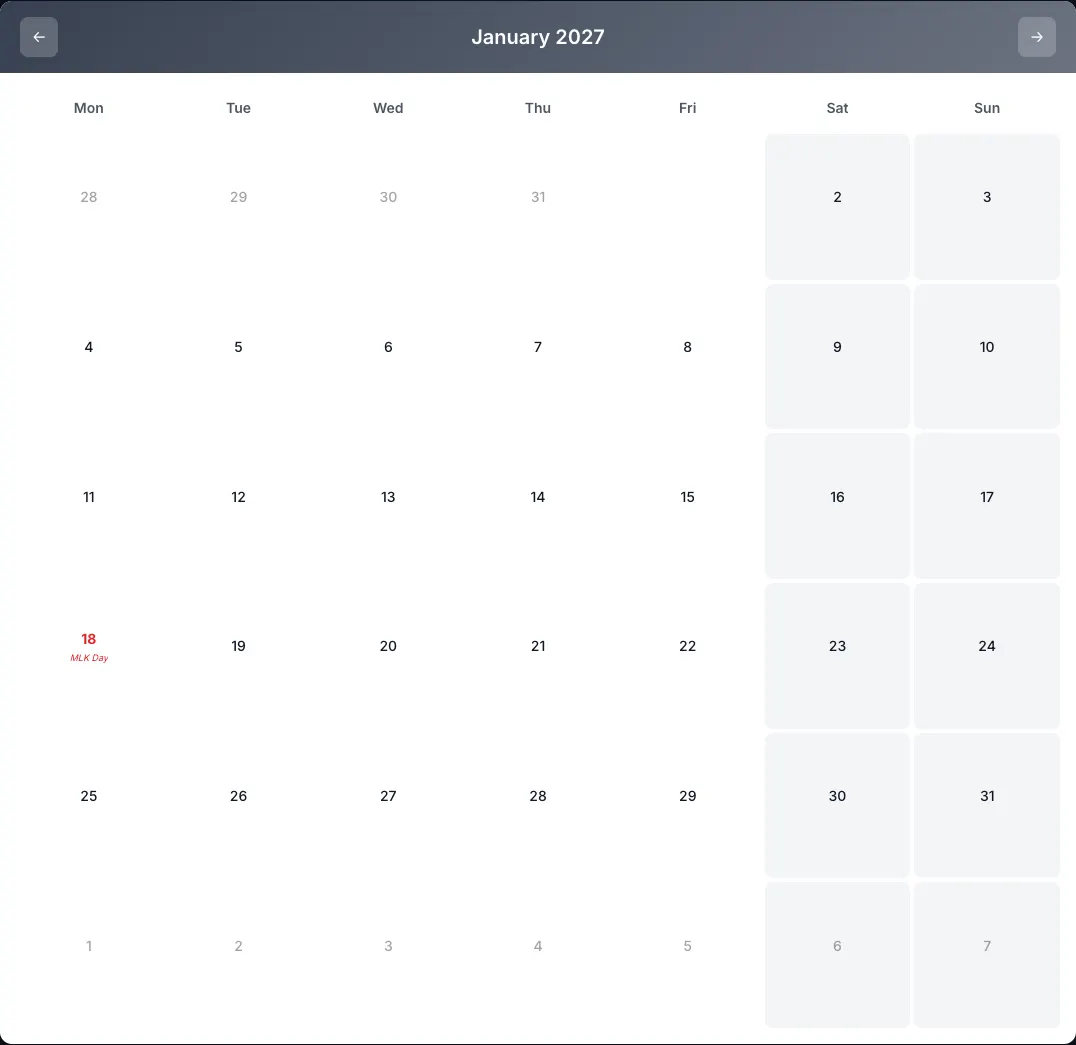
Put it on your calendar
The clock change is easy to miss because it happens on a Sunday morning. The November 2026 calendar and November 2027 calendar show the dates in context, and federal holidays around those weeks are on the US 2026 holiday list. If you plan your days in fixed blocks, the switch is a good moment to review them: time blocking covers how. For more on how the year is counted, see how many weeks are in 2026.
Frequently asked questions
Sunday, November 1, 2026 at 2:00 a.m. local time in the United States. Clocks go back one hour.
Sunday, November 7, 2027 at 2:00 a.m. local time.
Hawaii and Arizona (except the Navajo Nation). Puerto Rico, Guam, the US Virgin Islands, American Samoa and the Northern Mariana Islands also stay on standard time.